Some material changes are too small to see with conventional imaging. Surface roughness, nanoscale structures, thin-film variations and delicate sample features often require instruments that can measure at a much finer level.
This is where Park Systems brings practical value through atomic force microscopy and surface-characterization technologies. With systems designed for automated AFM, high-resolution research and thin-film measurement, the range helps laboratories study surfaces, structures and optical properties at micro- and nanoscale levels.
Looking Beyond the Surface with AFM and Ellipsometry
Surface analysis is not always about producing a sharper image.
Researchers may need to measure nanoscale topography, protect delicate samples during scanning, compare surface properties across different areas or determine thin-film thickness and refractive index.
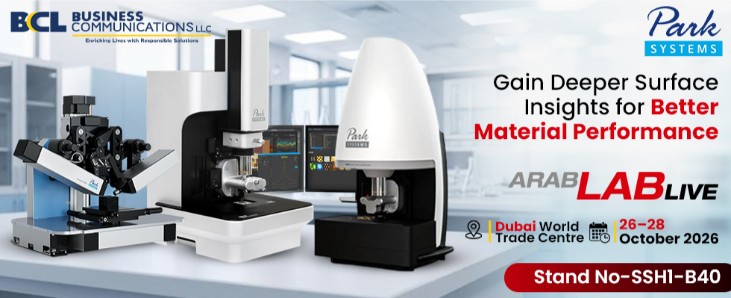
At ARABLAB 2026, Business Communications LLC will showcase selected Park Systems technologies at Sheikh Saeed Hall 1, Stand SSH1-B40, giving visitors attending arablab dubai 2026 an opportunity to understand how AFM and imaging ellipsometry can support different research needs.
Park FX40: Making Advanced AFM More Automated
Atomic force microscopy can provide highly detailed surface information, but operating an AFM traditionally requires careful probe setup, alignment and measurement preparation.
The Park Systems FX40 is designed to simplify these steps through greater automation.
Its features include:
- Automatic probe exchange
- Automatic laser alignment
- Sample-view camera
- True Non-contact™ mode
- Orthogonal scan system
- High mechanical stability
These functions help reduce setup effort while maintaining the precision needed for nanoscale measurements. Park Systems also positions the FX40 for high-resolution small-sample research, with automation designed to improve productivity.
For laboratories looking for an automated AFM system, this can make nanoscale imaging more accessible for routine research without removing the advanced measurement capability expected from an atomic force microscope.
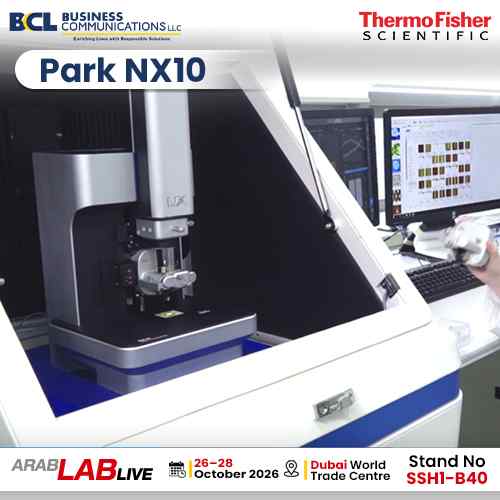
Park NX10: High-Resolution AFM for Detailed Research
Some laboratories place greater emphasis on repeatable high-resolution measurements across delicate or challenging samples.
The Park NX10 is designed for small-sample research and nanoscale metrology. It combines Park Systems' orthogonal scan technology with True Non-contact™ mode, helping reduce lateral motion artifacts while protecting both the probe and sample.
This makes the research AFM relevant for applications such as:
- Materials science
- Polymers
- Bioengineering
- Nanoelectronics
- Surface topography
- Advanced nanoscale characterization
For teams looking for a high-resolution AFM, the NX10 provides a research-focused platform for studying surfaces without relying only on conventional optical or electron imaging.
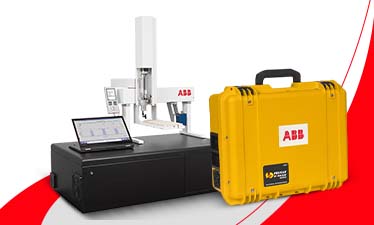
EP4: Measuring Thin Films with Imaging Ellipsometry
Not every surface question is best answered with AFM.
Thin films and microstructured samples may require information such as film thickness, refractive index and optical uniformity across a defined area.
The Accurion EP4 combines spectroscopic ellipsometry with optical microscopy. It can measure film thickness and refractive index on microstructured samples while providing spatial information across the surface. Park Systems states that the system can achieve lateral resolution down to 1 µm and supports measurements across UV, visible and near-infrared ranges.
The imaging spectroscopic ellipsometer can support:
- Thin-film measurement
- Microstructured materials
- Surface engineering
- Photonics
- Displays
- MEMS
- 2D materials
- Optical coatings
For laboratories involved in thin film characterization, the EP4 adds another way to study surface properties without limiting the analysis to a single measurement point.
Match the Surface Question with the Right Technology
AFM and imaging ellipsometry provide different types of information.
An AFM can reveal nanoscale topography and surface properties.
An imaging ellipsometer can help determine thin-film thickness, optical properties and variations across microstructured areas.
Choosing between them depends on what the laboratory needs to measure.
What Are You Trying to Learn from the Surface?
Before selecting equipment, it can help to start with a few practical questions:
- Do you need nanoscale topography?
- Is the sample delicate or sensitive to contact?
- Do you need automated measurement and easier setup?
- Is the focus on thin-film thickness or refractive index?
- Does the sample contain microstructured areas?
- Is the work for routine characterization or advanced research?
These questions can help narrow down whether a Park FX40, Park NX10 or Park EP4 is better suited to the application.
For example:
FX40 can be considered when automation and high-resolution nanoscale imaging are both important.
NX10 fits research environments that need precise and repeatable AFM measurements.
EP4 is suited to laboratories working with thin films, optical properties and microstructured surfaces.
Bring Your Surface-Characterization Questions to Stand SSH1-B40
We can explain resolution, measurement modes and instrument features. The more important question is how those capabilities relate to the sample being studied.
At Sheikh Saeed Hall 1, Stand SSH1-B40, visitors can speak with the BCL team about:
- Their current surface-characterization challenge
- Whether AFM or imaging ellipsometry is the better approach
- Sample size and surface type
- Requirements for automated or research-focused AFM
- Thin-film and microstructure measurement needs
- New laboratory projects or equipment upgrades
This gives visitors a clearer way to connect the technology with the work they actually need to perform.
For professionals comparing ARABLAB laboratory equipment exhibitors or looking for an atomic force microscope supplier, BCL's showcase provides an opportunity to understand the practical differences between AFM and ellipsometry before making an equipment decision.
Visit Business Communications LLC at Sheikh Saeed Hall 1, Stand SSH1-B40, from 26–28 October 2026 at Dubai World Trade Centre and explore Park Systems technologies for nanoscale imaging and surface characterization.