Laboratories today are expected to do more in less time. They need faster analysis, dependable results, better workflow control and technologies that can support increasingly specialised research, testing and quality requirements.
From identifying elemental composition and studying surfaces at the nanoscale to electrochemical testing, Raman analysis, ion chromatography and high-load materials testing, laboratories rely on very different technologies to answer very different questions.
At ARABLAB 2026, Business Communications LLC will bring these capabilities together through a carefully selected group of global technology partners. Visitors to Sheikh Saeed Hall 1, Stand SSH1-B40 can connect with solutions from Thermo Fisher Scientific, Park Systems, Gamry Instruments, JISA, Renishaw, Walter+Bai and Guangzhou Prin-Cen Scientific Co., Ltd.
Rather than viewing laboratory equipment as individual instruments, the showcase gives professionals an opportunity to look at how different technologies can support the complete journey from sample preparation and analysis to research, testing, quality control and decision-making.
One Showcase for Different Laboratory Challenges
Laboratories across research, manufacturing, environmental testing, pharmaceuticals, materials science and quality control rarely face the same analytical or testing problem.
One team may need rapid elemental analysis. Another may need to study a surface at nanometre scale. A materials laboratory may be focused on mechanical performance, while another facility may require dependable equipment for sample preparation or controlled laboratory processes.
BCL's portfolio brings these requirements together across four key areas.
Analytical Instruments: Turning Complex Samples into Useful Information
For analytical laboratories, the challenge is not simply collecting data. It is selecting the right technique for the information the laboratory needs.
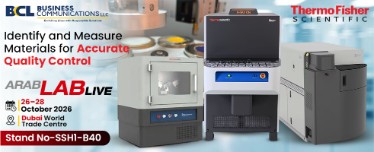
Thermo Fisher Scientific brings complementary XRF, OES and XRD technologies for elemental and structural analysis. Systems such as the ARL X900 XRF Spectrometer, ARL iSpark Plus OES and ARL X'TRA Companion XRD support requirements ranging from elemental analysis and metals testing to phase identification and routine materials analysis.
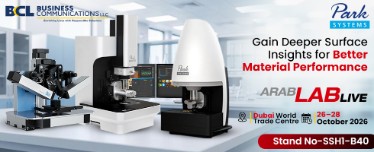
When the requirement moves from bulk material analysis to the nanoscale, Park Systems brings atomic force microscopy technologies. Solutions including the FX40 AFM and NX10 AFM support detailed surface investigation, while technologies such as the EP4 broaden the possibilities for advanced surface and thin-film characterisation.
For electrochemical research, Gamry Instruments offers technologies for applications such as corrosion, batteries, coatings, sensors and electrochemical impedance studies. The portfolio includes the Interface 1010E, multichannel potentiostat configurations, rotating electrode solutions and the Reference 620, giving researchers options for both general-purpose electrochemistry and more demanding low-current measurements.
Renishaw contributes Raman spectroscopy through the Strada® Intelligent Raman Microscope, combining Raman analysis with automated workflows to support chemical and structural investigation in industrial and multi-user laboratories.
Completing this analytical range, Guangzhou Prin-Cen Scientific Co., Ltd. brings technologies for ion analysis, including solutions such as the IC-50 Super IC, CIC-200, ELSpe-2 Cr(VI) and UPIC-8000. These extend the analytical conversation into ion chromatography and specialised laboratory analysis.
Together, these technologies allow laboratories to approach samples from different perspectives from elemental composition and material structure to nanoscale surfaces, electrochemical behaviour, molecular information and ionic composition.
Material Testing Equipment: Understanding How Materials Perform
Analysing what a material contains is only one part of the laboratory picture. In many engineering and manufacturing applications, laboratories also need to understand how that material performs when subjected to force.
Walter+Bai addresses this requirement through material testing technologies for tensile, compression and other mechanical testing applications.
Its TTM high-strength materials testing systems, for example, are designed for high-capacity testing, with the TTM series extending to forces of up to 5000 kN. The systems can support testing of materials and components such as metals, bars, tubes, fasteners, wires, cables and chains.
For materials laboratories, engineering teams and quality-control environments, this creates a direct connection between laboratory testing and the real mechanical performance expected from a material or component.
Laboratory Equipment: Supporting the Work Behind Every Test
Not every important laboratory process happens inside an analytical instrument.
Before analysis begins, laboratories may need to mix, agitate, prepare or process samples under controlled conditions. Equipment such as laboratory shakers and reactors supports these essential stages of laboratory work.
This part of the BCL portfolio complements advanced analytical and testing instruments by addressing the everyday processes that keep laboratory workflows moving.
For visitors planning new laboratories or upgrading existing facilities, it also provides an opportunity to consider both specialised instrumentation and the supporting equipment needed around it.
Scientific Solutions: Taking Laboratory Capability into the Field
Some scientific work needs to happen closer to the source rather than inside a permanent laboratory.
JISA supports this requirement through scientific solutions including mobile laboratory concepts, allowing laboratory capabilities to be configured for field and project environments.
This can be particularly relevant where testing, sample handling or scientific operations need to take place closer to industrial sites, environmental projects or other field locations.
By bringing laboratory functionality nearer to the point of work, mobile solutions create another way for organisations to think about where and how scientific testing can be carried out.
Bring Your Laboratory Requirement to ARABLAB 2026
Choosing laboratory technology should start with the question the laboratory needs to answer.
Is faster elemental analysis required?
Does a research team need better nanoscale imaging?
Is the priority corrosion or battery testing?
Does a QC laboratory need dependable materials testing?
Or does testing need to move closer to the field rather than remain inside a conventional laboratory?
These questions are more useful than starting with an instrument model.
At ARABLAB 2026, BCL's stand brings different technology areas together so visitors can connect their laboratory challenge with the right analytical, testing or scientific approach.
Compare Technologies Around the Work Your Laboratory Actually Does
Instead of evaluating laboratory equipment only from brochures and specifications, visitors can use the BCL showcase to look at technologies through the context of their own workflow.
The portfolio represented at the stand spans:
- Analytical instruments for different measurement requirements
- Nanoscale and surface characterisation
- Electrochemical research and testing
- Raman spectroscopy
- Ion analysis
- High-capacity material testing
- Shakers, reactors and supporting laboratory equipment
- Mobile and field-based scientific solutions
This breadth gives laboratory managers, researchers, scientists, QA/QC professionals and technical teams an opportunity to consider different capabilities together and identify which technologies are relevant to their current or upcoming laboratory requirements.
Turn a Stand Visit into a More Useful Technology Discussion
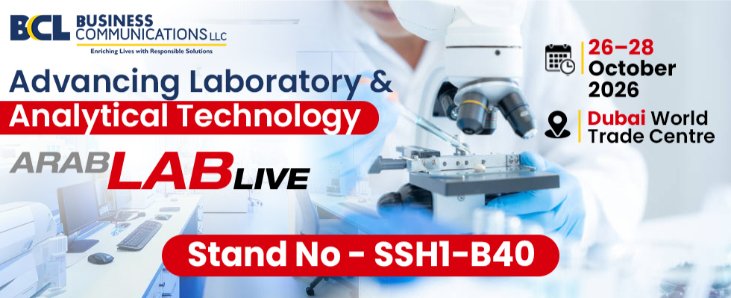
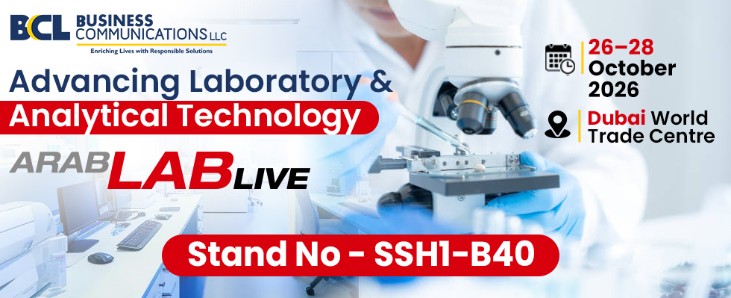
ARABLAB LIVE 2026 will take place from 26–28 October 2026 at Dubai World Trade Centre, bringing together laboratory professionals across industrial testing, scientific research, analytical science and quality control.
At Sheikh Saeed Hall 1, Stand SSH1-B40, visitors can meet the BCL team and use the opportunity to:
- Bring a specific testing or analytical challenge for discussion
- Understand which technology is suitable for a particular application
- Compare approaches for laboratory analysis and testing
- Discuss plans for new laboratories or equipment upgrades
- Learn more about technologies represented by BCL's global partners
For professionals evaluating new laboratory capabilities in the UAE, the stand creates one place to connect application requirements with specialised scientific and testing technologies.
Visit BCL at Stand SSH1-B40, Sheikh Saeed Hall 1, from 26–28 October 2026 at Dubai World Trade Centre and bring your laboratory requirements to the team for a more focused technology discussion.