Bioprocess development often begins with cultivation at a smaller scale before moving into more controlled reactor conditions. Researchers need to maintain suitable growth conditions, test different process settings and collect reliable data before deciding how a process should move forward.
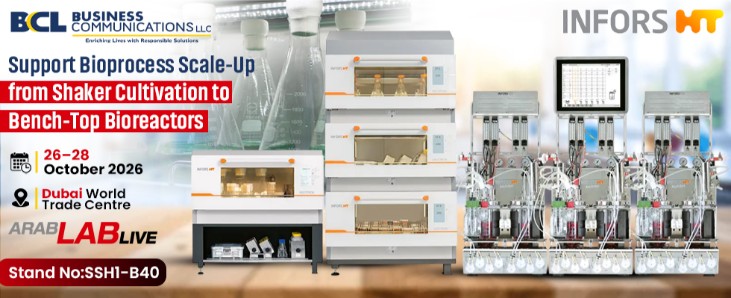
INFORS HT supports this journey with cultivation and bioreactor technologies designed for different stages of bioprocess work. The Multitron incubator shaker supports microorganism and cell-culture cultivation, while the Multifors 2 bench-top bioreactor allows several controlled bioreactor runs to be carried out in parallel.
Building a Stronger Path from Cultivation to Process Development
Moving from shake-flask cultivation to a controlled bioreactor is an important step in many research and development workflows.
The conditions that support early cultivation need to be understood before researchers begin controlling parameters more closely in a bioreactor.
At ARABLAB 2026, Business Communications LLC will present selected INFORS HT technologies at Sheikh Saeed Hall 1, Stand SSH1-B40, giving professionals looking for laboratory equipment suppliers ARABLAB an opportunity to understand how these systems can support different stages of cultivation and process development.
Multitron: Reliable Conditions for Shake-Flask Cultivation
The INFORS HT Multitron is a laboratory incubator shaker designed for the cultivation of microorganisms and cell cultures.
It combines controlled shaking and temperature conditions within a stackable design, helping laboratories make better use of available space while running multiple shake-flask cultures. INFORS HT also offers configurations with options such as cooling, CO₂ control, humidity control and lighting depending on the application.
The Multitron can support:
- Microbial cultivation
- Cell-culture work
- Shake-flask studies
- Parallel cultivation
- Process-development experiments
- Research requiring controlled incubation and shaking
For laboratories using an incubator shaker, the value lies in creating consistent cultivation conditions before moving to more controlled bioreactor work.
Multifors 2: Run Several Bioreactor Experiments in Parallel
Once a process moves into a bioreactor, researchers need greater control over the cultivation environment.
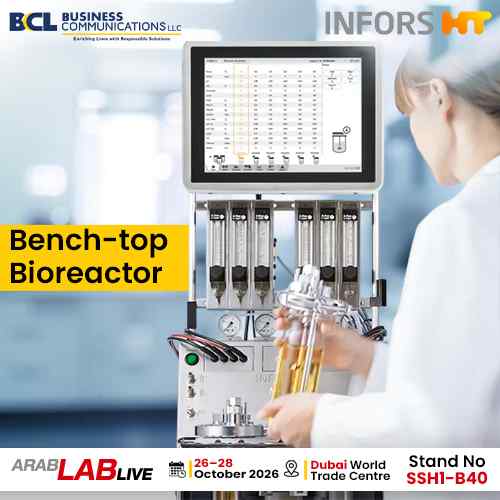
The INFORS HT Multifors 2 is a bench-top parallel bioreactor system designed for process development and characterization. Up to six vessels can be operated from one touchscreen, helping researchers run several conditions side by side within the same laboratory setup.
This can support work involving:
- Parallel bioreactor studies
- Process development
- Process characterization
- Testing different cultivation conditions
- Cell and microbial bioprocesses
- Preparation for later scale-up
INFORS HT also highlights the use of sensor technologies that can be carried forward toward larger-scale bioreactors, helping researchers generate data that is more useful when planning the next stage of development.
Why Parallel Testing Matters During Development
Bioprocess development often involves testing several variables.
Researchers may need to adjust:
- Temperature
- Agitation
- pH
- Gassing
- Feeding strategy
- Other process conditions
Running several vessels in parallel can make it easier to study these changes under controlled conditions.
Instead of testing one condition at a time, a parallel bioreactor allows researchers to investigate several process settings within the same development stage.
Connect Early Cultivation with the Next Step in Scale-Up
Cultivation and scale-up should not be treated as completely separate parts of the process.
Information gathered during shake-flask work can guide the move into controlled bioreactor studies. Data generated during bench-top bioreactor experiments can then help researchers understand how the process may need to change as scale increases.
This creates a more connected path from early cultivation through process development.
Where Does Each System Fit?
A simple way to look at the two INFORS HT technologies is:
- Multitron – supports controlled shake-flask cultivation for microorganisms and cell cultures.
- Multifors 2 – supports parallel, controlled bioreactor experiments during process development and characterization.
Before selecting equipment, laboratories can consider:
- Is the work still at shake-flask stage?
- Does the process need tighter control over cultivation conditions?
- Are several conditions being tested at the same time?
- Is the laboratory preparing for future scale-up?
- How much bench and floor space is available?
- Does the workflow involve microorganisms, cell cultures or both?
These questions help laboratories choose equipment according to where they are in the bioprocess journey.
Follow the Bioprocess Journey at Stand SSH1-B40
At the BCL stand, visitors can look at cultivation and bioreactor development as connected stages rather than isolated pieces of equipment.
Visitors can learn more about:
- Shake-flask cultivation
- Incubator shaker configurations
- Parallel bioreactor operation
- Process-development workflows
- Moving from cultivation toward controlled scale-up studies
- Choosing equipment around current and future research needs
For professionals reviewing laboratory equipment suppliers ARABLAB, this provides a practical way to understand how INFORS HT technologies can support the progression from early cultivation to more controlled bioprocess development.
Visit Business Communications LLC at Sheikh Saeed Hall 1, Stand SSH1-B40, from 26–28 October 2026 at Dubai World Trade Centre to learn more about INFORS HT Multitron and Multifors 2 technologies for cultivation and bioprocess development.