Knowing what a material is made of is only part of the picture. Engineers and laboratories also need to know how that material behaves when it is pulled, compressed, bent or repeatedly loaded over time.
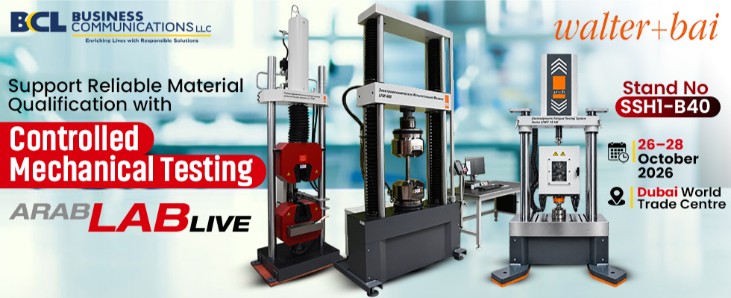
Walter+Bai develops testing systems for these different requirements. Its range covers high-force static testing, cyclic and fatigue testing, and electromechanical universal testing, helping laboratories study strength, durability and long-term material performance.
Different Tests Reveal Different Material Behaviours
A single test cannot answer every question about material performance.
Some applications need very high forces. Others need repeated loading to understand fatigue life. Routine laboratories may need a flexible system for tensile, compression or flexural testing.
At ARABLAB LIVE 2026, Business Communications LLC will showcase selected Walter+Bai systems at Sheikh Saeed Hall 1, Stand SSH1-B40, giving visitors reviewing ARABLAB laboratory equipment exhibitors an opportunity to understand how these testing methods fit different applications.
TTM Systems: Built for High-Force Material Testing
Some materials and components need much higher test forces than a standard universal testing machine can provide.
Walter+Bai's TTM high-strength materials testing systems are servohydraulic machines designed for high-capacity testing, with the series extending up to 5000 kN. The systems are intended for demanding work involving materials and large components.
They can support:
- High-force tensile testing
- High-force compression testing
- Metals and alloys
- Structural components
- Fasteners and bolts
- Heavy-duty material testing
For laboratories carrying out high strength material testing, the TTM range provides the force capacity needed for demanding specimens and components.
Electrodynamic Systems: Understanding Fatigue Over Time
A material may perform well under a single load but behave very differently when that load is repeated thousands or millions of times.
This is where fatigue testing becomes important.
Walter+Bai's electrodynamic and dynamic testing systems are designed for repeated and cyclic loading. The wider Walter+Bai fatigue portfolio supports applications such as high-cycle fatigue, fracture studies, component durability and crack-growth testing.
These systems can be used for:
- Cyclic load testing
- Fatigue life testing
- High-cycle fatigue testing
- Component durability studies
- Materials research
- Repeated loading applications
For laboratories looking for a fatigue testing machine, this type of system helps show how a material or component performs over time rather than only under one static load.
Electromechanical Systems: Flexible Testing for Everyday Laboratory Work
Many laboratories need a system that can perform several common mechanical tests on the same platform.
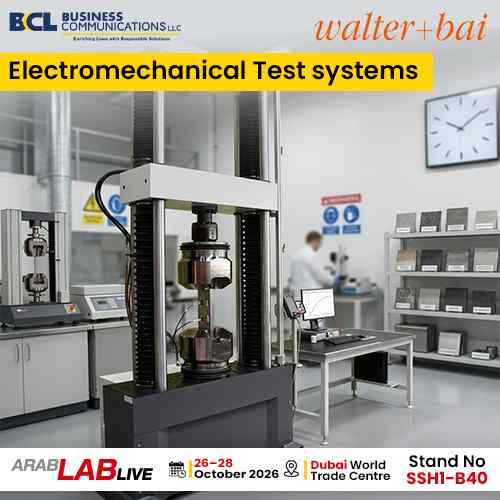
Walter+Bai's electromechanical floor-standing systems are designed for static material testing such as tensile, compression and bending work. High-capacity versions are available for demanding applications, with systems reaching up to 2500 kN.
They can support:
- Tensile testing
- Compression testing
- Flexural testing
- Static material testing
- Metals and composites
- Engineering components
For laboratories using a universal testing machine, this provides a flexible approach when several different mechanical properties need to be measured.
Match the Test to the Way the Material Will Be Used
Material testing becomes more useful when it reflects the real conditions the material or component may face.
A structural component may need high-force testing. An automotive or aerospace part may need repeated-load fatigue evaluation. A quality-control laboratory may need routine tensile or compression tests.
The test method should therefore start with the performance question.
Start with the Load, Then Choose the System
Before selecting equipment, consider:
- How much force is required?
- Is the test static or repeated?
- Does fatigue life need to be measured?
- Is tensile, compression or flexural testing required?
- What type and size of specimen will be tested?
- Is the work for research, development or routine quality control?
In simple terms:
TTM systems fit demanding high-force applications.
Electrodynamic systems are suited to repeated loading and fatigue studies.
Electromechanical systems provide flexibility for routine tensile, compression and flexural testing.
This makes it easier to select a system around the material and test requirement instead of starting only with machine capacity.
Put Material Performance into Context at Stand SSH1-B40
At the BCL stand, the discussion can move beyond how much force a machine can apply.
Visitors can look at:
- High-force versus routine material testing
- Static versus cyclic loading
- Fatigue and durability requirements
- Tensile, compression and flexural test methods
- Testing needs for metals, composites and structural components
- New laboratory and equipment upgrade requirements
For professionals reviewing ARABLAB laboratory equipment exhibitors, this provides a clearer way to connect the testing system with the way a material or component is expected to perform in real use.
Visit Business Communications LLC at Sheikh Saeed Hall 1, Stand SSH1-B40, from 26–28 October 2026 at Dubai World Trade Centre to learn more about Walter+Bai material testing technologies for strength, fatigue and performance evaluation.